A long, winding parade of women holding lanterns crossed Palmer Field like a procession of fireflies.
This sight was once a familiar part of an annual U-M tradition called Lantern Night.
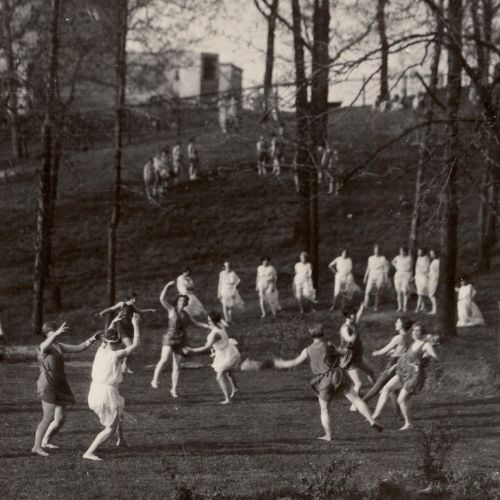
Lantern Night’s origins can be traced back to the first Women’s Field Day in 1910—a festive occasion that featured a picnic lunch, archery tournament, folk dancing, several athletic competitions, singing, and “fancy marching” where women formed the shape of the Block M. It was all to honor U-M’s new Palmer Field, the first dedicated outdoor space for women’s athletics at U-M.
Archived photos of the event show a tall pile of scrap wood, which would later become a crackling bonfire. Women were appointed as new Michigan League officers at the celebration’s end, by firelight.
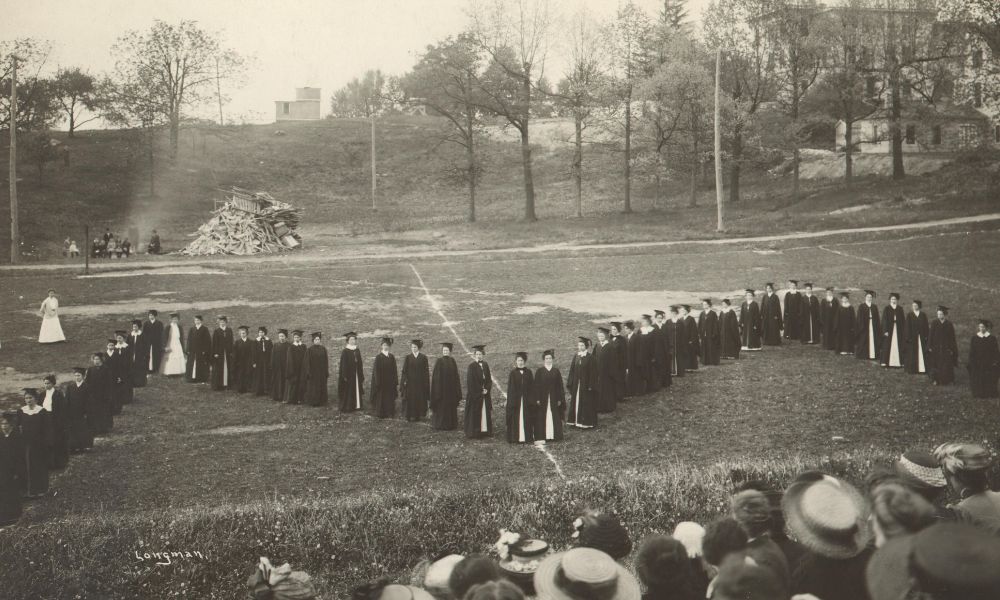
The first Women’s Field Day at U-M in 1910, featuring women standing in the shape of a block “M.”
The Women’s Field Day became an annual event and by 1912 it also included a “grand lantern march” where U-M women carried glowing lanterns across the field in the evening. A class pageant was added the following year, which turned into a “dance festival,” according to The Michigan Daily.
Many non-athletic aspects of Field Day appear to have stopped with the advent of World War I. By 1915, the Daily published the first mention of a women’s lantern night ceremony, calling it a “picturesque tradition” inspired by other women’s colleges. One such college, Bryn Mawr, had been holding an annual lantern night since the 1880s.
This ceremony fell out of use, only to be revived again in 1919 as U-M’s official Lantern Night, where women in U-M’s senior class handed lighted lanterns to women in the junior class, symbolically “passing the torch.” Women in the junior class passed flower-covered hoops to the sophomore class, in turn.
Over time, Lantern Night grew to include a dance pageant featuring the myth of Persephone, athletic awards, and a singing competition. Lantern Night parades could be seen winding through Ann Arbor streets, and across the Diag. During some years, decorations included luminous paper lanterns hung from the branches of Diag trees.
Although the presence of hand-held lanterns appears to have petered out over time, Lantern Night remained an important annual celebration for women at U-M until the 1960s.
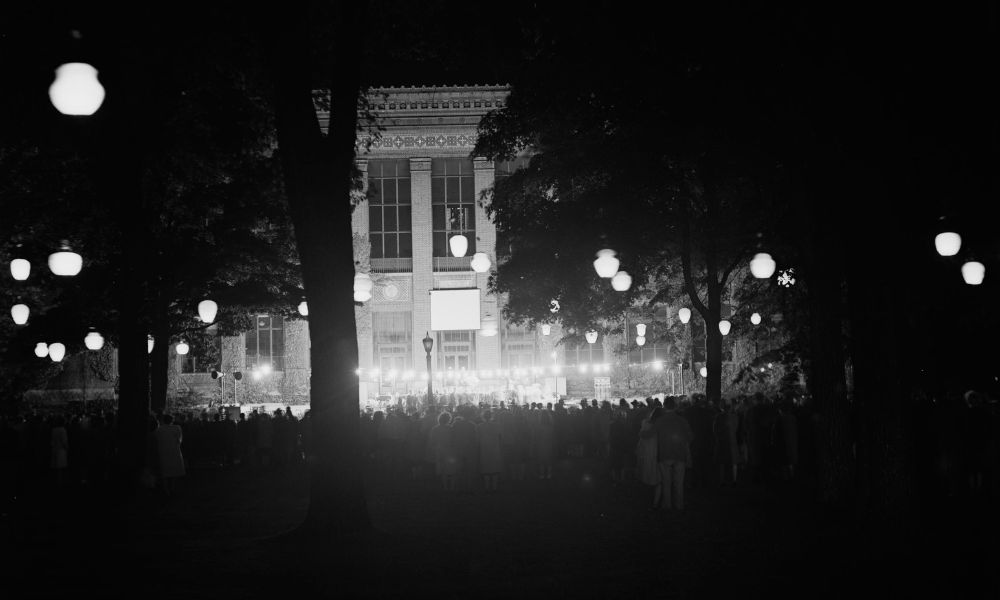
1946 Lantern Night celebration, featuring lanterns on the Diag.
Historical details about Lantern Night can be found in The Michigan Daily Digital Archives, the Women’s League records, and the Michigan Alumnus magazine collection.