
People said that if you shook Professor Alonzo Palmer out of a sound sleep, he would leap to his feet and start to lecture. That’s how much he loved to teach medicine.
Palmer joined the University of Michigan’s Department of Medicine in 1852, when it was just four years old. He was an evangelist for the coming era of scientific doctoring. He would spread the new gospel to thousands of students in a two-volume textbook, A Treatise on the Science and Practice of Medicine. Doctors of his generation were developing treatments based on careful, systematic observation. Soon, medical sleuths peering through early microscopes at bacteria and viruses would vindicate this new science of disease.
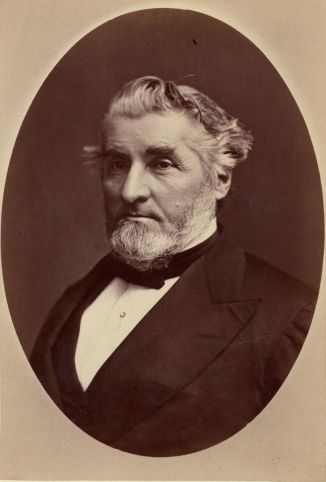
U-M Medical Professor Alonzo Palmer.
So when the troubadours of an allegedly more gentle regime of health care called homeopathy demanded seats on the Michigan faculty, Palmer responded with acid alacrity. In 1868, he published Four Lectures on Homeopathy that were studded with insults: “. . . the fallacious character of homeopathic experience, so often contradictory and absurd . . . the persistent reiterations of unscrupulous men and their enthusiastic adherents . . . a disregard of truth that would be provoking were it not too puerile and ridiculous . . . ”
“Is it not time,” he begged his colleagues in “regular” medicine, “to enlighten the people respecting [homeopathy], showing them its utter absurdities and inconsistencies?. . . Every principle of honor impels us to refuse professional associations with such a system and such men . . . whether in the sick-room . . . or in schools of medicine . . .”
Palmer was an early soldier in a war between scientific medicine and alternative practitioners that still rages today.
Records at the Bentley reveal how, in the mid- to late-1800s, homeopathy threatened to wreck the medical faculty and put the University at odds with the state government. Indeed, the state supreme court guaranteed the University’s power to determine its own affairs, free of legislative interference, only after homeopaths challenged that power in court.
The battle nearly cost Henry Philip Tappan his appointment as Michigan’s first president.
In 1851, the Regents were scouting candidates for the presidency when Zina Pitcher, an influential board member and a leading “regular” physician in Detroit, heard that Tappan went to a prominent New York homeopath named Federal Vanderburgh. Under a fake name, Pitcher wrote Vanderburgh to ask if this was true. Vanderburgh said it was.
That alone was enough to block Tappan’s appointment—at first. Instead, the Regents offered the job to the Rev. William Adams, also of New York. Dr. Vanderburgh had to laugh at that, since Adams, like Tappan, had also been his patient for years. But Adams turned the Regents down. So Tappan, despite his health-care choices, was chosen after all.
But the mainstream doctors—whom the homeopaths called “allopaths”—on Michigan’s faculty remained dead-set against the “gentle medicine.”
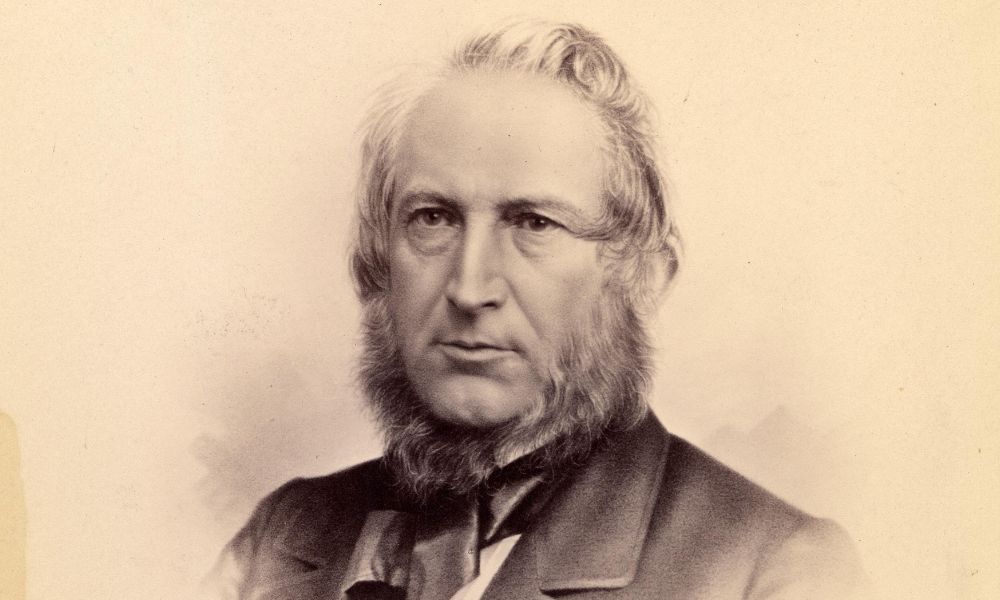
Henry Tappan, whose appointment as U-M’s president was initially blocked due to rumors that he believed in homeopathy.
Could Like Cure Like?
In the early 1800s, before scientific medicine and medical schools, most Americans were treated at home with age-old herbal remedies. If you saw a doctor, he probably held to the ancient theory that disease arose from imbalances of the body’s “humors”—blood, phlegm, yellow bile, black bile—and would treat you with the miserable, ineffective remedies of bloodletting and purging. Surgeons operated without antibiotics. If you got seriously ill in 1800, there was not much a doctor could do for you.
People hungered for something better. So new theories abounded. There was hydropathy, the “water cure.” Thomsonian doctors—herbalists who followed the teachings of Samuel Thomson —said cold caused disease, so heat would cure it. There was eclecticism, which tried a bit of everything, plus “the movement cure,” “electropathy,” “the inhalation cure.” But none caught on like homeopathy.
Its founder was Samuel Hahnemann (1755–1843), a cantankerous German physician who perceived that remedies like bloodletting were doing his patients more harm than good. Searching for alternatives, he stumbled on a report that Peruvian cinchona bark could cure malaria. He ingested cinchona and came down with malaria-like symptoms. From this he leaped to the notion that if a substance caused certain symptoms in a healthy person, it would cure the same symptoms in a sick person—if the substance was diluted to reduce its toxicity.
“Like cures like,” he famously declared in 1796.
In fact, cinchona contains quinine, a natural compound that kills the parasites that cause malaria. That did not mean that “like cures like.” But Hahnemann went on a binge of extrapolation. One example: When presented with a case of sciatica—chronic pain caused by compression of the sciatic nerve—he prescribed a dilution of bitter cucumber. Reason: The plant had deep roots. Deep pain, deep roots—or so he figured.
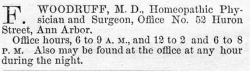
Advertisement in the 1868 Michigan Chronicle for a homeopathic physician in Ann Arbor.
By that sort of illogical leap, Hahnemann postulated a “law of similars” and a new theory of medicine. He called it homeopathy, from the Greek for “similar” and “sickness.”
He and his followers diluted scads of substances, then shook or pounded them, which Hahnemann said would awaken their slumbering power to cure a body’s ailing “vital force.” The dilutions reached absurd proportions. In one of his anti-homeopathy lectures, Dr. Palmer calculated that a medium-ish homeopathic dilution would suspend one grain of a supposedly active agent in a quantity of water equal to 500 Lake Superiors. (If the active agent effectively vanished in such a solution, Hahnemann said, the solution would still “remember” it.)
To the scientific “regulars,” this was pure quackery. Yet the little homeopathic vials spread far and fast, first in Europe, then the United States, and no wonder. Homeopaths gained a reputation for comforting chats with patients. Their tonics had no nasty side effects; they were said to help the body heal itself. They were even supposed to carry “spiritual” properties.
Soon people were swearing by this new medicine—even though no one had proven that it actually worked.
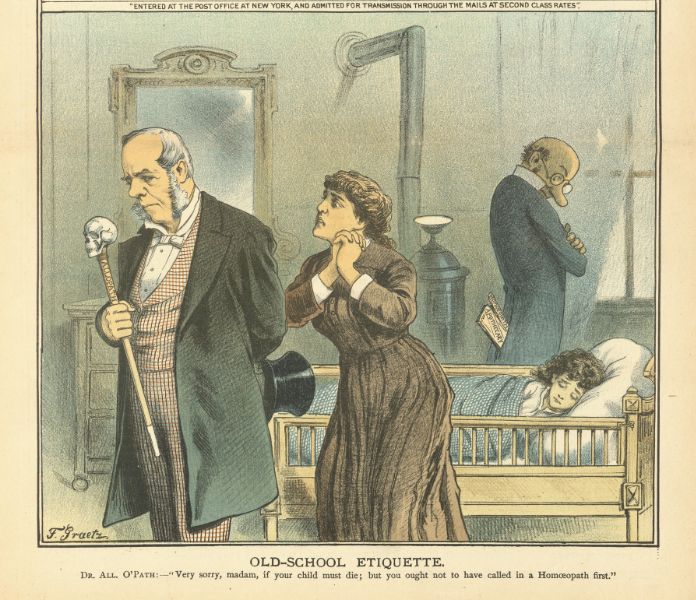
Anti-homeopathy cartoon from Yale University’s Bert Hansen Collection of Medicine & Public Health in Popular Graphic Art.
The Giant Gordian Knot
By the mid-1800s, a war between “regular” medicine and homeopathy was raging across the United States. The American Medical Association was organized chiefly to fight homeopathy, especially in education.
But with “sectarian” schools of homeopathy sprouting elsewhere, Michigan homeopaths demanded their own. They were popular enough to wield political power, and their barrage of letters and petitions to Lansing would continue for decades.
The struggle raised fundamental questions: Should public enthusiasm, channeled through elected politicians, determine the course of medicine? Or was medicine the province of actual experts? Would Lansing or the University decide what students should learn? Would the popular will govern education? Or expertise?
Michigan’s constitution empowered the Regents to run the University. But the legislature retained powers to administer education. When Lansing reorganized the state school system in 1855, the new law declared “there shall always be one professor of homeopathy in the Department of Medicine” in Ann Arbor.
Actually, no, said the Regents and the medical professors. They flatly refused to hire a homeopath.
For 12 years the Regents defied the law. Lansing threatened to withhold the University’s funding if it did not comply. But the medical faculty threatened to resign, and again the Regents defied Lansing. The homeopaths sued, but the courts balked, unsure of their jurisdiction.
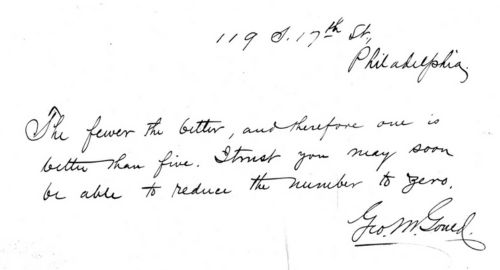
A letter supporting the removal of homeopaths from U-M.
Finally, Lansing dropped the funding threat but insisted homeopathy must be taught somewhere, somehow. Witnesses told a legislative committee that rancor between the two camps was so virulent that “to teach homeopathy in the Medical Department . . . would ultimately kill the department itself.” Palmer surveyed “eminent men of the profession,” then reported their unanimous view: “If the proposed change was made, not one of the faculty could remain with self-respect, and no gentlemen could be found to fill their places.”
Egos and politics had tied a giant Gordian knot. One observer said “unquestioned zeal for the public good did not altogether conceal personal ambition, political motive, desire for partisan advantage, and possibly also a feeling towards the University that delighted in strife and confusion.”
At this point, James Burrill Angell, selected as U-M’s president in 1871, had had enough. The fight was blocking his plans to expand the faculty, the curriculum, and the campus. So he asked: If the two camps can’t teach in the same department, how about two departments?
That cut the knot. Abram Sager, dean of medicine and a founding member of the medical faculty, resigned in outrage. But the faculty’s other “regulars” held their noses and went along.
So in 1875, a Homeopathic College of Medicine welcomed a class of 24—a tiny contingent beside the 600 “regular” medical students. They would take standard medical courses from the “regular” faculty, then add courses with two homeopathic professors.
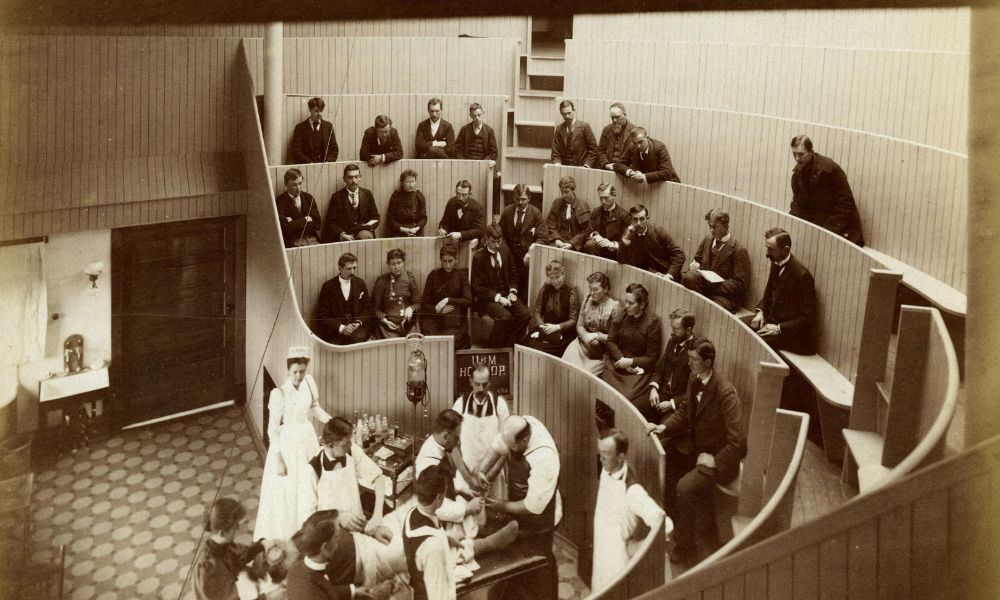
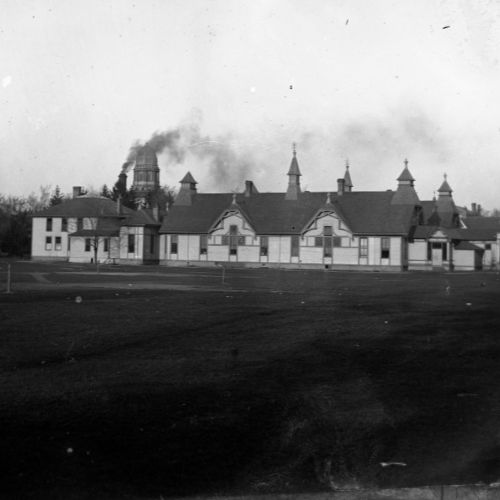
Homeopathic Amphitheater at the University of Michigan in 1893.
The Weight of False Promises
Victor Vaughan, a medical graduate of 1878, said “there was but little friction between the students in the two schools. The homeopaths . . . bore with resignation the good-natured jibes tossed to them by the ‘old liners’ as they often lived in the same rooms, ate at the same tables, and did their tasks side by side.”
That go-along-to-get-along experience may have prepared Vaughan for the 1890s, when the war would resume and he was dean of medicine. He would not fight tooth and nail. A light touch, he perceived, might carry the day for the “regulars.”
In 1894, Henry Obetz, dean of the Homeopathic College, started the new trouble. He said the time had come to merge the two colleges.
Now Dean Vaughan played his cool hand.
He had long suspected “this cult” of homeopathy would eventually collapse under the weight of its false promises. “I looked upon it as I would regard a laboratory experiment,” he would write later, “and held that if scientific medicine could not successfully compete with sectarianism it deserved to fail . . . I had no doubt as to the final outcome.” He would just nudge that outcome along. (It’s worth noting that Vaughan had the science right in the case of homeopathy, but not so much when he endorsed eugenics later in his career.)
Vaughan polled scores of leaders in both camps: Should the colleges merge?
By now, a century after Hahnemann, the germ theory of disease had vanquished the shibboleths of humoralism and the “vital force.” Homeopaths divided over the merger question. But Vaughan’s questionnaire offered “regulars” a chance to bury homeopathy in reasoned scorn.
“The contest so far as the University of Michigan is concerned is over,” wrote William H. Carmalt, professor of medicine at Yale, in a typical “regular” reply. Quackery had been defeated. Now Michigan had “a most excellent opportunity to demonstrate its fallacy to the world and . . . let it die a natural death by dry rot . . .”
The Michigan Supreme Court ruled in 1895 that the legislature had no power to compel the Regents to create or cut any program. That shored up the University’s standing as an independent entity and put the homeopathy question solely in the Regents’ hands. They let the Homeopathic College stagger on. But to anyone who respected the findings of science, its claims to legitimacy had been shattered.
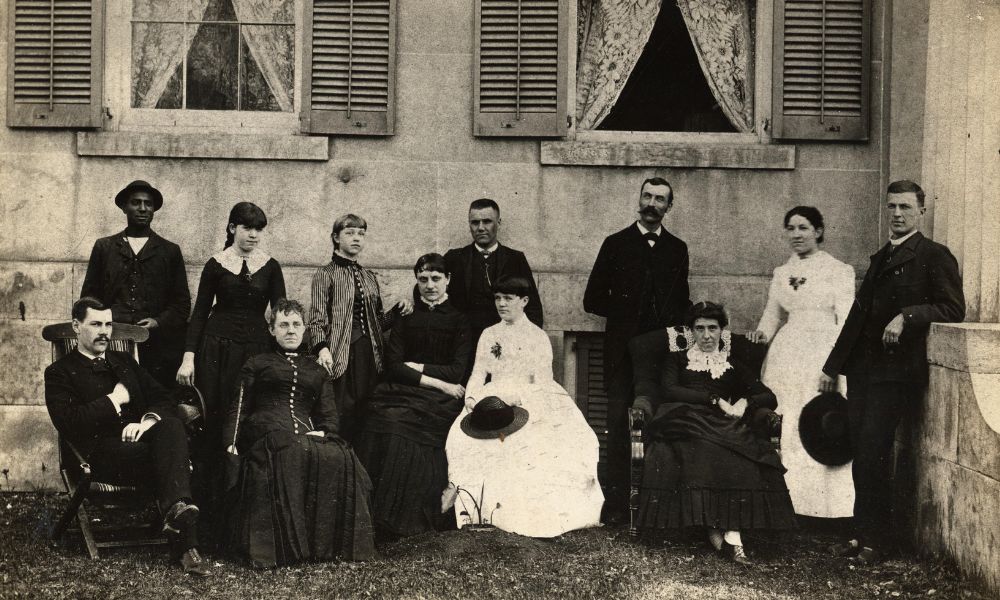
Staff of the Homeopathic Hospital in September of 1884.
Patient-Centered Care
Homeopathy at Michigan went through a long last gasp. Enrollments dropped. Homeopathic faculty made no discoveries. In 1915, the Department of Medicine and Surgery became the Medical School, expanding in size and prestige while simply ignoring homeopathy.
True believers remained. When the Homeopathic College was finally folded into the Medical School and then shut down for good in 1925, its former dean, Wilbert Hinsdale, wrote: “Today homeopathy is as true and unerring in its foundations and end results as it was in the beginning.”
Medical scientists have taken precisely the opposite view. Homeopathy’s foundations were false. Its treatments were worthless. Psychologists studying people who thought homeopathy had cured their ills determined these patients were in the grip of a powerful placebo effect.
Yet homeopaths nursed an idea that mainstream physicians would eventually embrace—that physicians should pay careful attention to each patient’s circumstances and traits: age, diet, lifestyle, social relations, emotional life. Advocates of “patient-centered care” would push the same view in the 1980s and ’90s. They echoed the advice of Royal S. Copeland, the Homeopathic College’s most famous graduate, who became New York City’s public health czar, a popular health columnist, and a U.S. senator.
“It is not enough to treat a disease by name . . . or to prescribe for a disease because of the peculiar manifestations which are common to all cases of the same disease,” Copeland wrote. “The remedy must be selected to fit the special symptoms presented by the individual patient. When so selected, the remedy fits the disease as the wing of a bird fits the air.”
Sources for this story:
The homeopathy controversy at Michigan appears in several Bentley collections including scores of replies to Victor Vaughan’s circular letter in the papers of the U-M Medical School and the publications issued by the Homeopathic College.